> For the complete documentation index, see [llms.txt](https://docs.airops.com/llms.txt). Markdown versions of documentation pages are available by appending `.md` to page URLs; this page is available as [Markdown](https://docs.airops.com/docs/es/contexto/memory-stores.md).
# Bases de conocimiento
Busca semánticamente tu conocimiento, documentos y datos con bases de conocimiento
## ¿Qué es una base de conocimientos?
Las bases de conocimientos te permiten almacenar y recuperar selectivamente contexto de grandes volúmenes de información relevante, mejorando considerablemente la calidad de tus resultados de LLM. Al importar datos estructurados y no estructurados (como contenido de blogs, catálogos de productos, documentación interna o materiales de atención al cliente), puedes proporcionar a tus flujos de trabajo impulsados por LLM un contexto más profundo y obtener respuestas de mayor calidad.
Puedes importar datos desde diversas fuentes, incluidas cargas de archivos (PDF, CSV, documentos de texto, imágenes), scraping web, Google Drive, bases de datos SQL y Shopify.
En el núcleo de las bases de conocimientos está la búsqueda semántica, un potente método de recuperación que devuelve el contenido más similar en función del significado y no solo de la coincidencia de palabras clave. Esto significa que, aunque tu consulta no coincida exactamente, AirOps aún puede encontrar y mostrar contenido relacionado. Por ejemplo, si estás escribiendo un artículo sobre postres de chocolate, el sistema podría recuperar contenido sobre pasteles de chocolate, distintos tipos de chocolate e incluso recetas de postres relacionadas, ayudándote a enriquecer tus prompts con la información más útil y relevante en contexto.
## Creación de una base de conocimientos
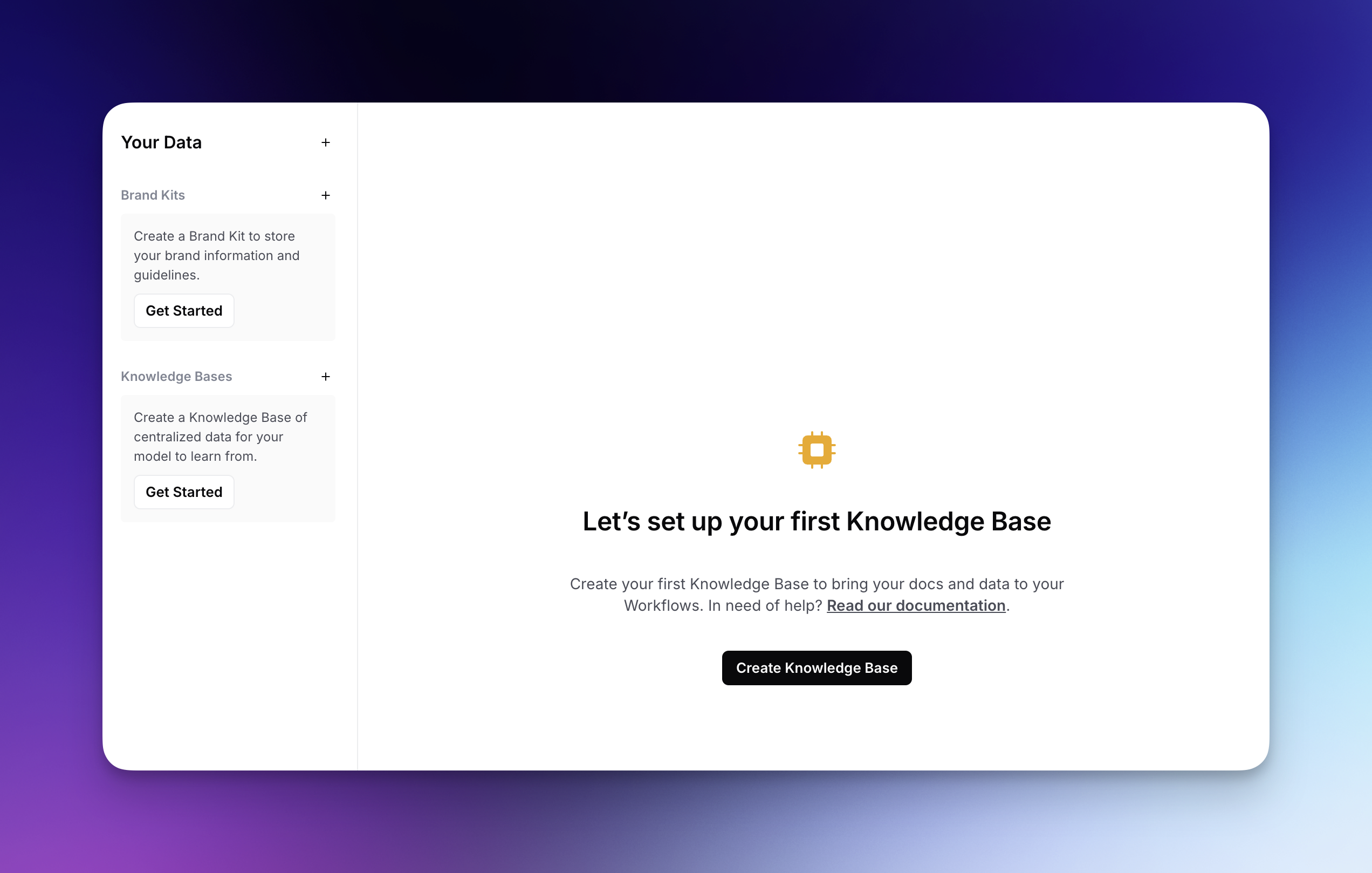
Configurar una base de conocimientos es fácil. Solo necesitas tener listo tu contenido para poder subirlo:
{% @arcade/embed url="" flowId="67THPCPcj05izgdtQssL" %}
---
# Agent Instructions
This documentation is published with GitBook. GitBook is the documentation platform designed so that both humans and AI agents can read, navigate, and reason over technical content effectively. Learn more at gitbook.com.
## Querying This Documentation
If you need additional information that is not directly available in this page, you can query the documentation by asking a question.
Perform an HTTP GET request on the following URL with the `ask` and `goal` query parameters:
```
GET https://docs.airops.com/docs/es/contexto/memory-stores.md?ask=&goal=
```
`ask` is the immediate question: it should be specific, self-contained, and written in natural language.
`goal` is what the user is ultimately trying to achieve, the reason they need the answer. Sharing it helps GitBook give you a better, more relevant answer. A goal is most helpful when it describes the outcome the user wants rather than restating the question. For example, with `ask=how do I create an API token`, a goal like `automate deployments from our CI pipeline` lets GitBook tailor the answer to that use case.
The response will contain a direct answer to the question and relevant excerpts and sources from the documentation.
Use this mechanism when the answer is not explicitly present in the current page, you need clarification or additional context, or you want to retrieve related documentation sections.